
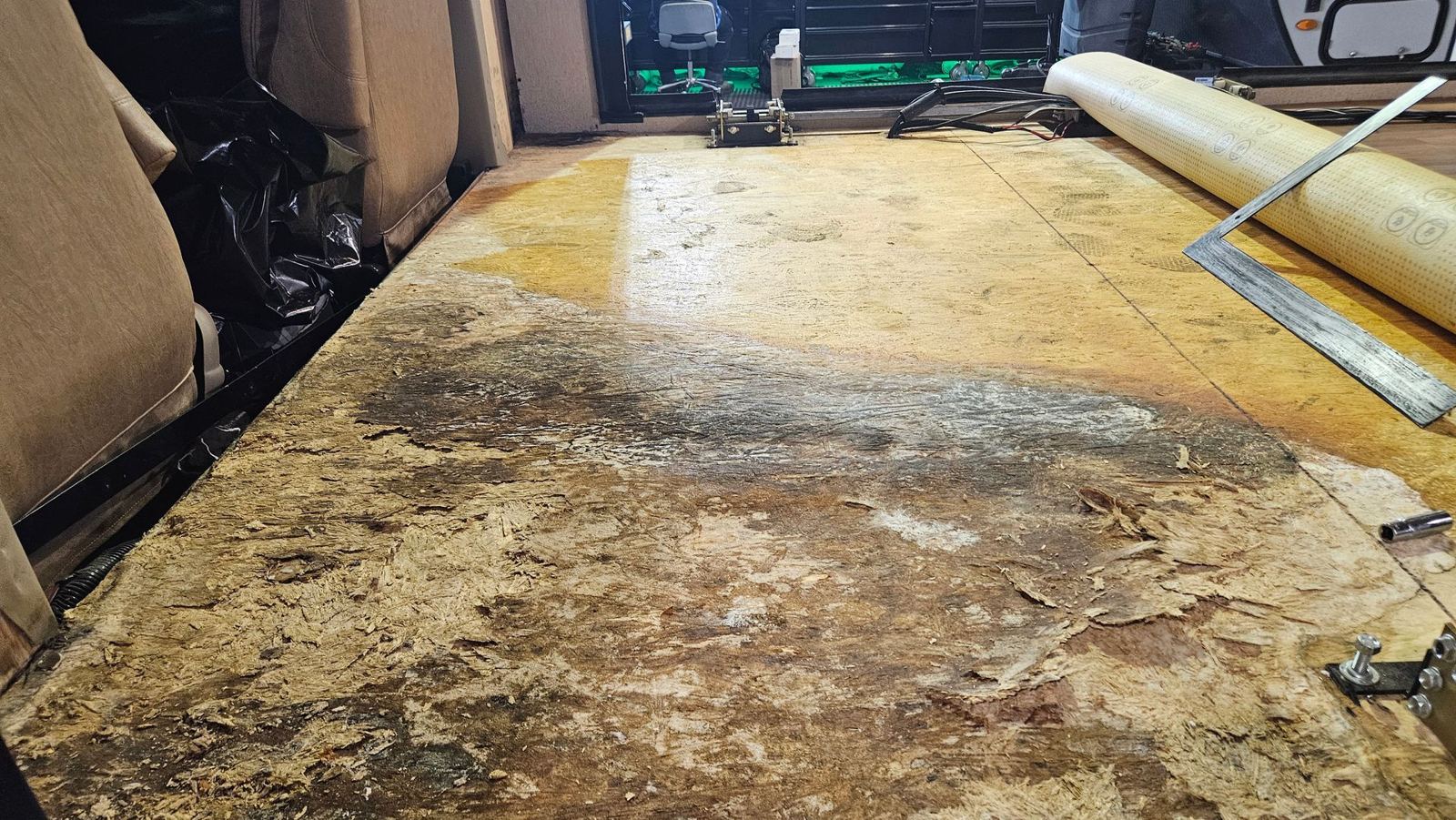
RV roof damage often starts where you can’t see it. A small opening in the sealant may never cause an obvious drip inside, but water can travel through framing, insulation, wiring, flooring and walls long before the damage shows.
Where can water enter an RV?
An RV roof has plenty of potential entry points:
- Roof vents and skylights
- Air-conditioner openings
- Plumbing vents and antennas
- Roof edges and termination points
- Slide-out roofs
- Seams, fasteners and previously repaired areas
Sealants expand, contract and age with sunlight, moisture, temperature swings, travel vibration and storage. Small cracks, gaps, voids or separation let water move beneath the surface.
Real damage from a slide-out roof leak
Water entered through the roof of this RV’s slide-out. Once inside, it followed the path of least resistance under the finished surfaces and caused extensive rot that couldn’t be seen from above.
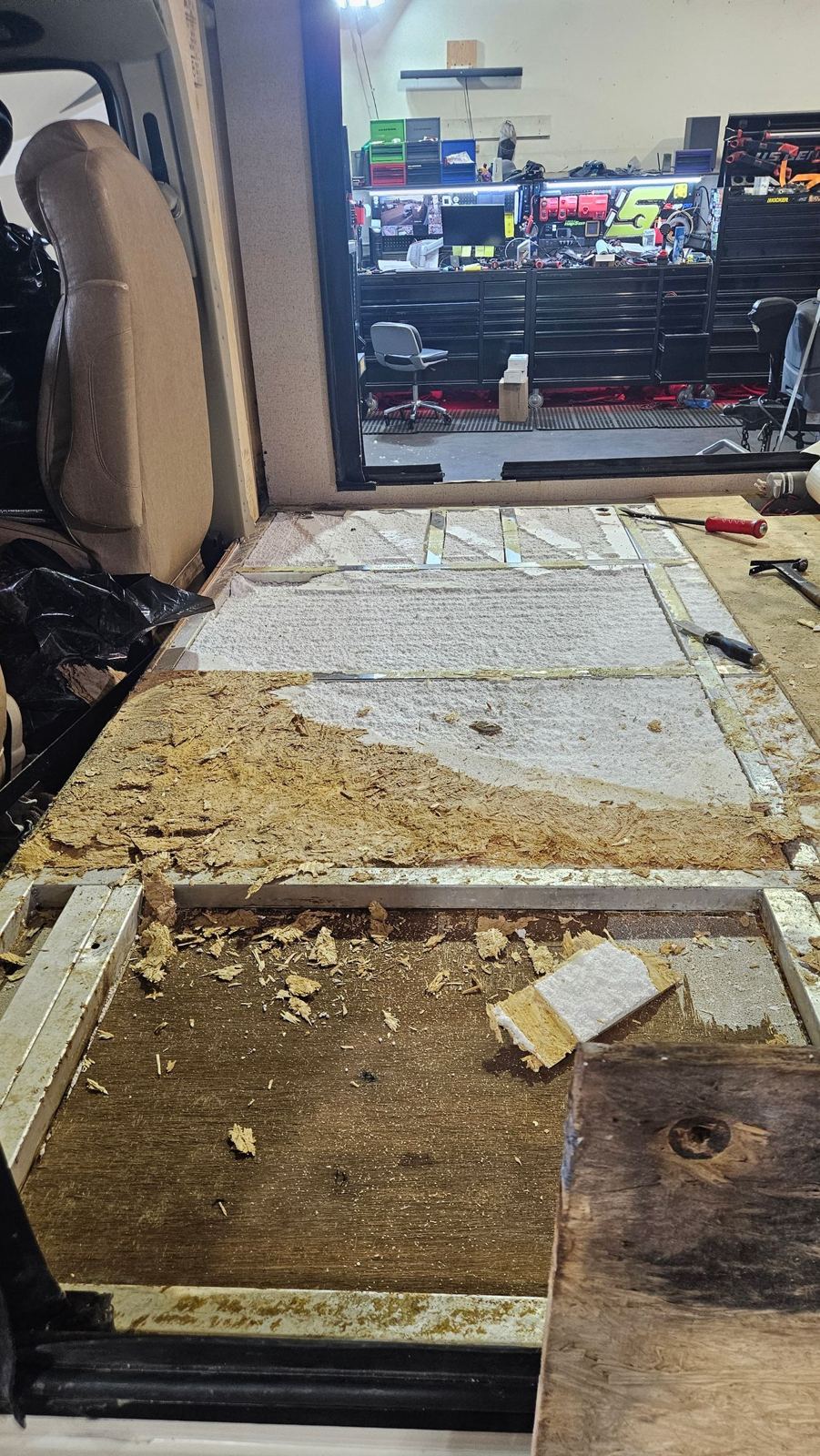
That’s what makes RV water intrusion so destructive: the damage stays hidden while the roof decking, subfloor, insulation, walls and structure keep deteriorating.
No inspection can guarantee an RV will never leak. But finding a weak seal early can be the difference between routine maintenance and a major structural repair.
Not every RV roof needs the same products
“Rubber roof” gets used as a catch-all, but RVs may have PVC, EPDM rubber, TPO or another system. Each has its own cleaning, maintenance and product-compatibility requirements. A cleaner, sealant or protectant that’s right for one membrane can be useless or even damaging on another, so we identify the material first and choose products to match.
What our roof inspection and preventive care includes
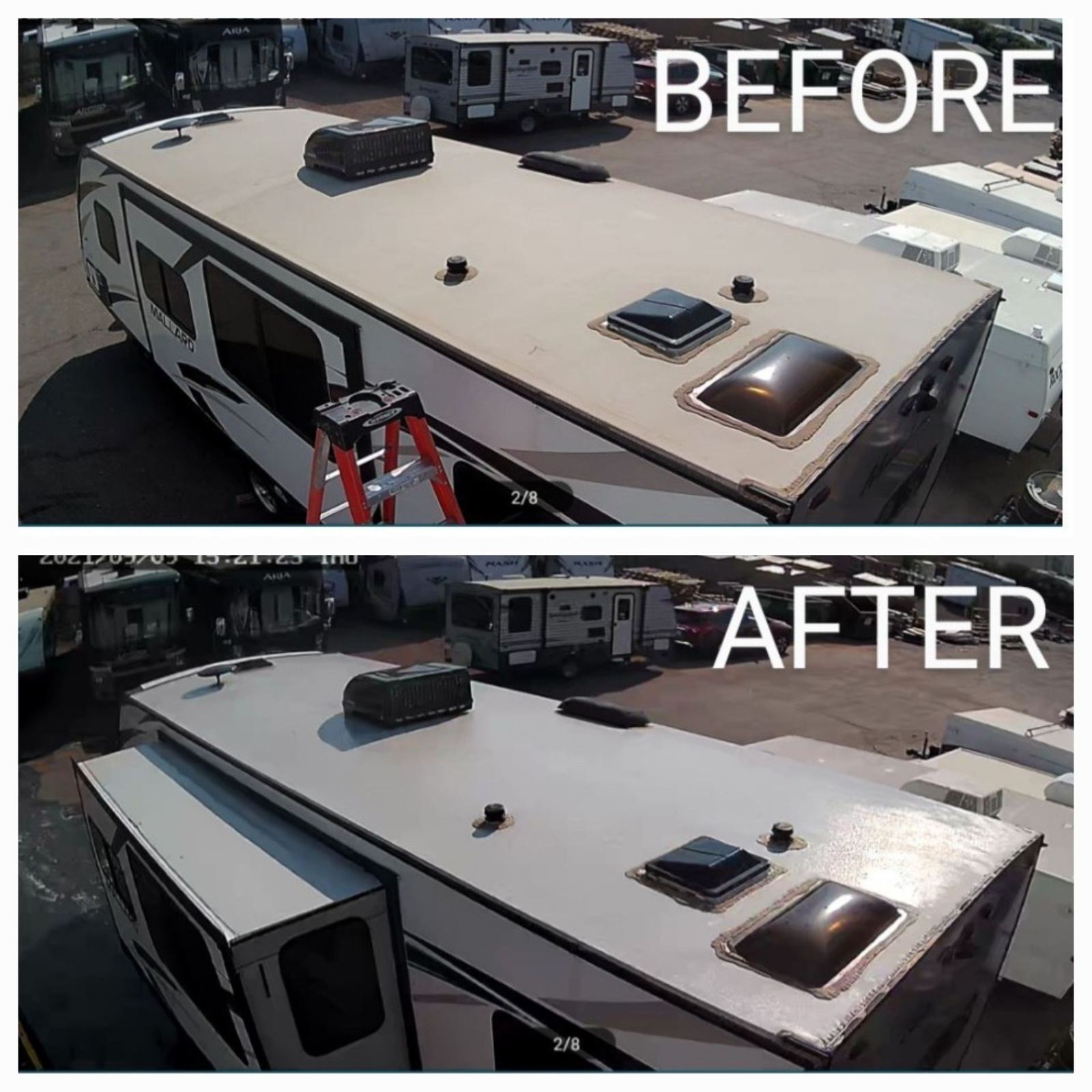
- Cleaning the PVC or rubber roof with the right method
- Inspecting the membrane for visible wear or damage
- Inspecting sealant around roof-mounted components and penetrations
- Checking for cracking, separation, gaps and voids
- Inspecting roof-edge and side sealants
- Applying a conditioner or UV protectant when it suits the material
- An estimate for any repairs the technician recommends
We’ll explain what needs attention now, what to keep an eye on, and what’s in good shape.
Warning signs you shouldn’t ignore
Call for an inspection if you notice:
- Cracked, lifting, missing or separated sealant
- Loose sealant around vents, skylights or roof accessories
- Tears, punctures, bubbles or exposed areas in the membrane
- Soft spots in the roof or floor
- Interior stains, discoloration, swelling or bubbling
- A persistent musty smell