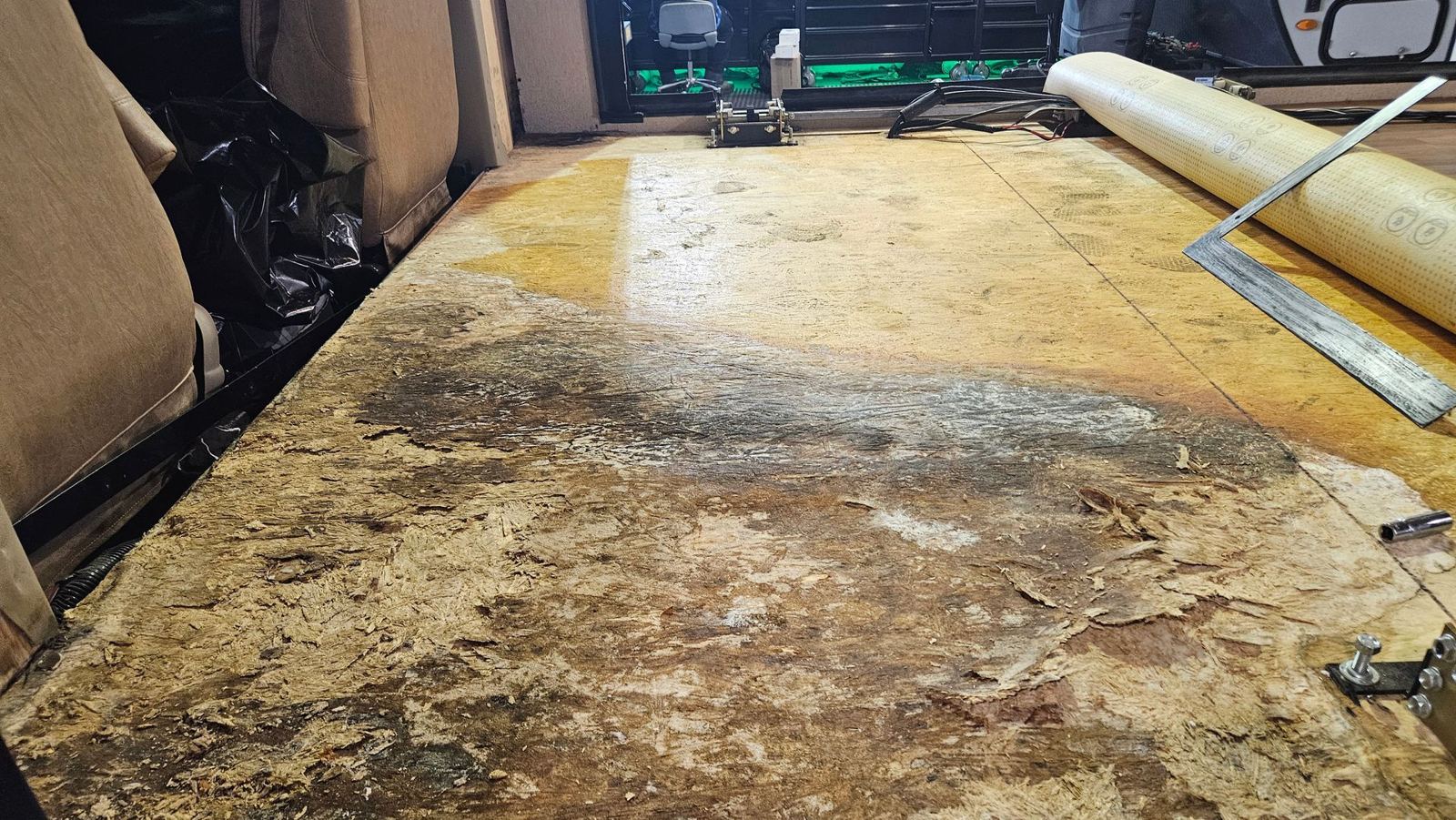
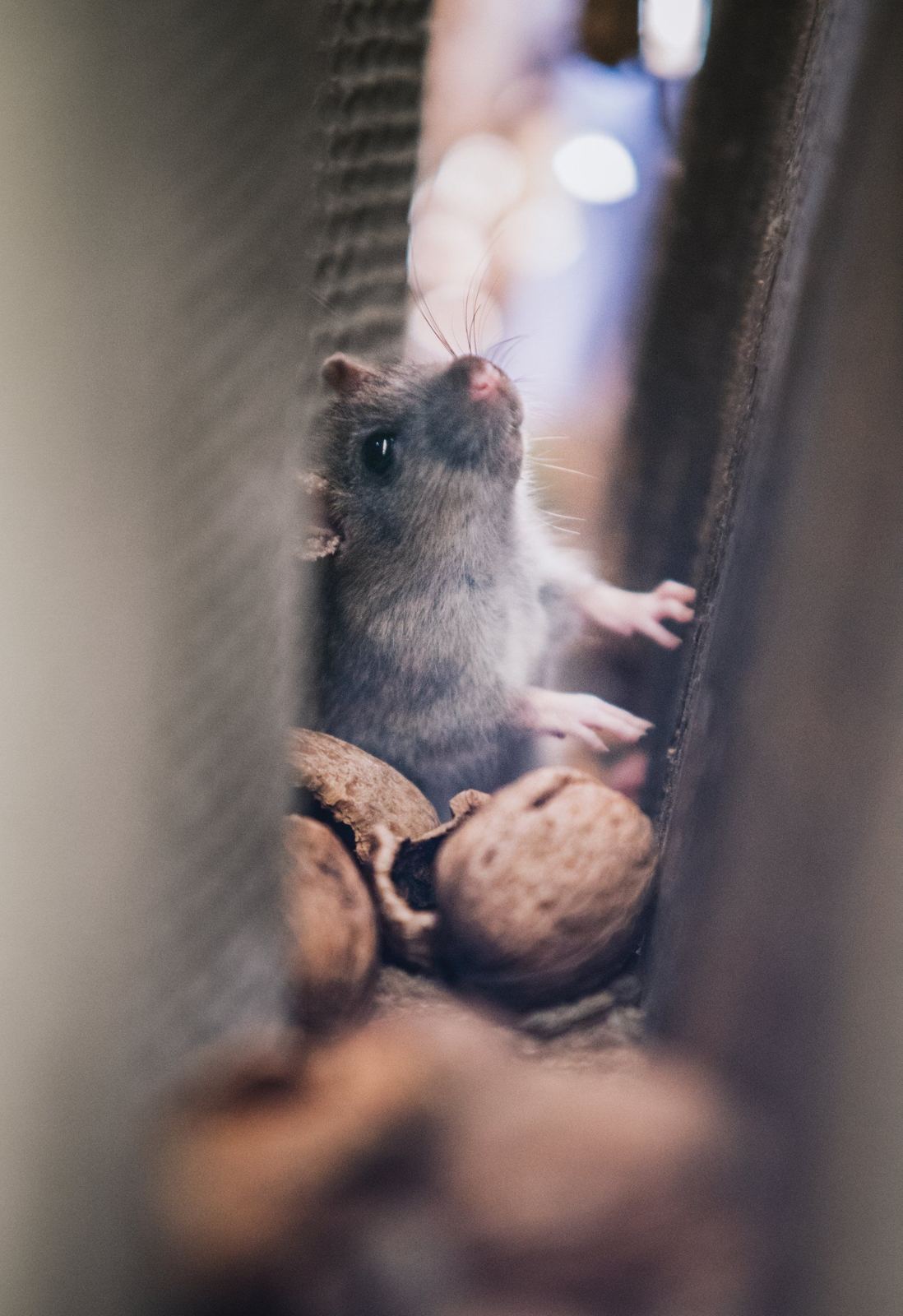
Rodent damage gets expensive fast.
One of our technicians once suited up in protective gear before crawling into the underbelly of a fifth wheel. Mice had moved in during storage and damaged plumbing, ductwork, insulation and other hidden components. What started as a few uninvited guests turned into an extensive repair.
That’s why prevention matters. Mice chew wiring, water lines, ductwork, insulation, flooring and anything you’ve stored. Their urine, droppings and nests can also contaminate places that are hard to reach safely. The best time to stop rodent damage is before they get inside.
Signs of rodent activity in an RV
- Droppings in cabinets, drawers, storage bays or near appliances
- Shredded paper, fabric or insulation used as nesting material
- Chewed food packaging, wiring, hoses or ductwork
- Unusual odors from walls, cabinets, vents or the underbelly
- Scratching sounds, or signs of activity after the RV has been stored
If you find one sign, keep looking. Rodent activity often hides behind cabinets, under floors, inside the underbelly or around appliances.
Remove what attracts them
Rodents are looking for food, water, warmth and shelter. Make your RV a less inviting target before every storage period:
- Remove all food, including dry goods, pet food, treats, spices and snacks
- Clean cabinets, drawers, counters, the stovetop and the area under the burners
- Vacuum floors, storage compartments, upholstery seams and under seat cushions
- Empty the trash and remove paper, fabric and other easy nesting material
- Fix leaks or standing water that could be a water source
- Park away from tall grass, brush, trash and birdseed whenever you can
Peppermint, dryer sheets, soap and similar remedies can add a little deterrence, but they’re no substitute for removing food and sealing entry points.
Inspect the places mice use to get inside
A mouse can squeeze through a gap about 1/4 inch wide, roughly the width of a pencil. On an RV, check carefully around:
- Plumbing, electrical, propane and sewer-line penetrations
- Slide-room openings and seals
- Exterior storage compartments
- Furnace, refrigerator and water-heater access areas
- Doors, windows, vents and damaged weather seals
- The underbelly, wheel wells and any missing or damaged material
Be careful around appliance vents and combustion-air openings. They must ventilate properly and should never be blocked to keep pests out.
Seal entry points correctly
Small gaps may need metal mesh or steel wool secured with the right sealant. Larger openings may need hardware cloth, metal flashing or a properly fitted repair. Expanding foam alone is not rodent-proof: rodents chew right through it.
Already found signs of mice?
Bring it in before your next trip. We’ll inspect the underbelly, appliances and plumbing for hidden damage, repair what’s been chewed, and seal the openings they used to get in.